Forget everything you know about bland, mushy, or boring vegetables. This recipe for Healthy Sautéed Vegetables is a complete game-changer, transforming a simple side dish into the star of your plate. We’re harnessing the power of high heat in a cast-iron skillet to create something truly special.
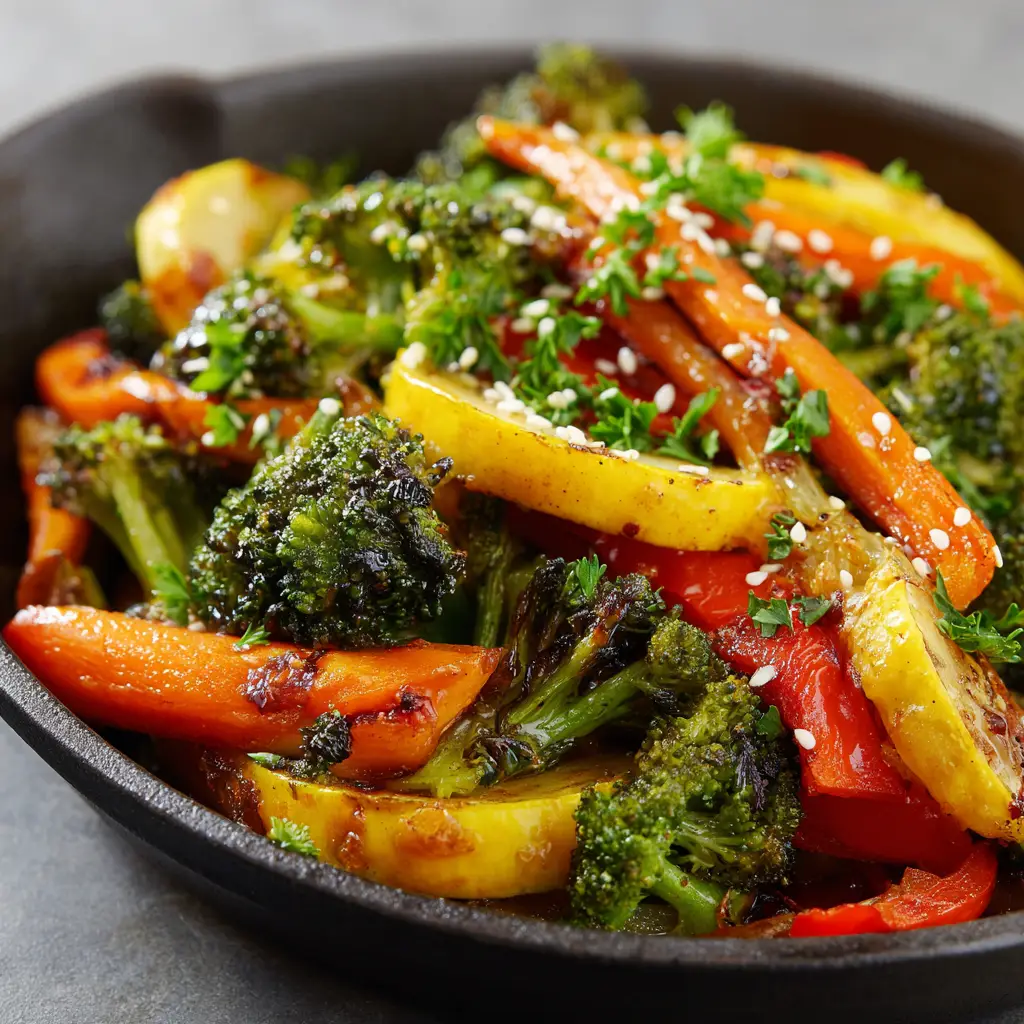
You’ll see bright green broccoli florets with irresistible charred edges, sweet orange carrots, and tender yellow squash. Strips of red bell pepper add a pop of color and sweetness, all coated in a beautiful glossy sheen from the oil and caramelized spots from the perfect sear. This isn’t just cooking; it’s about building texture and flavor in under 15 minutes.
Why This Skillet Method is a Game-Changer
This isn’t your average steamed vegetable recipe. Here’s what makes this method stand out:
- Perfectly Charred, Never Soggy: By using a screaming-hot skillet and not overcrowding the pan, we force the vegetables to sear and caramelize, developing deep, roasted flavors instead of steaming into softness.
- Vibrant and Visually Stunning: The quick-cooking process locks in the vegetables’ bright, beautiful colors, making for a dish that looks as good as it tastes—just like the photo.
- Texture is Everything: From the tender-crisp bite of the broccoli to the soft sweetness of the peppers and the nutty crunch of toasted sesame seeds, every mouthful is a delight.
- Incredibly Fast & Versatile: This entire side dish comes together in about 15 minutes, making it the perfect healthy addition to any weeknight meal.
The Vibrant Building Blocks for Your Vegetable Sauté
The beauty of this recipe lies in its simplicity and the quality of the ingredients. Each one plays a crucial role in achieving that picture-perfect result.
Broccoli Florets
We use fresh broccoli, cut into bite-sized florets. These little “trees” are perfect for catching the oil and seasoning, and their edges get wonderfully crispy and charred in the hot skillet.
Carrots
Sliced into thin rounds or on a bias, carrots provide a foundational sweetness and a firm bite. They go into the pan first to give them a head start on cooking.
Yellow Squash
Cut into half-moons, yellow squash adds a tender, delicate texture and a splash of sunshine. It cooks quickly, so we add it in the middle of the process to prevent it from getting mushy.
Red Bell Pepper
Vibrant red bell pepper strips bring a mild sweetness and a pop of color that rounds out the visual appeal. Their structure holds up well to the high heat of the sauté.
Avocado Oil
To get that glossy sheen and prevent sticking, a high-smoke-point oil is non-negotiable. Avocado oil is perfect for this, as it can handle the high heat required for searing without burning.
Garlic
A couple of cloves of finely minced garlic, added at the very end of cooking, provides an aromatic backbone of flavor. Adding it last prevents it from scorching and turning bitter.
Fresh Parsley & Toasted Sesame Seeds
The finishing touches are critical. Chopped fresh parsley adds a burst of herbaceous freshness, while toasted sesame seeds deliver a nutty flavor and a delightful textural crunch.
Essential Tools for Achieving the Perfect Sear
You don’t need a lot of fancy equipment for this recipe, but the right pan is key to getting those coveted charred edges.
- Cast Iron Skillet: A 12-inch (30cm) cast iron skillet is highly recommended. It retains heat incredibly well, which is essential for searing vegetables properly instead of steaming them.
- Sharp Chef’s Knife: For uniform cuts, which ensures everything cooks evenly.
- Large Mixing Bowl: Useful for tossing the vegetables with oil and seasonings before they hit the pan.
Bringing Your Healthy Sautéed Vegetables to Life, Step-by-Step
Follow these steps closely, paying attention to the sensory cues. The sounds and smells are your guide to a perfect sauté.

Step 1: The Art of Preparation
First, prepare your finishing touches. If your sesame seeds are not already toasted, place them in a dry skillet over medium heat. Toast for 2-3 minutes, shaking the pan frequently, until they are fragrant and lightly golden. Remove them immediately and set them aside.
Wash and thoroughly dry all your vegetables. Chop your broccoli into bite-sized florets, slice the carrots into 1/4-inch (6mm) rounds, slice the yellow squash into half-moons, and cut the red bell pepper into thin strips. Mince the garlic and chop the parsley.
Step 2: Mastering High-Heat Searing
Place your cast iron skillet over medium-high heat and let it get hot for about 2-3 minutes. You’ll know it’s ready when a drop of water sizzles and evaporates instantly. Add the avocado oil to the hot skillet; it should shimmer.
Carefully add the sliced carrots and cook for 2-3 minutes, stirring occasionally. Next, add the broccoli florets. Spread them in a single layer and let them cook without moving for 1-2 minutes to encourage charring. You should hear a loud, consistent sizzle.
Continue cooking the broccoli for another 2-3 minutes, stirring occasionally, until bright green and tender-crisp. Add the yellow squash and red bell pepper strips to the pan. Cook for 3-4 more minutes, stirring, until all vegetables are tender-crisp and you see brown caramelized spots.
Step 3: The Finishing Touches
In the final minute of cooking, add the minced garlic and sauté until fragrant, about 30-60 seconds. Be careful not to let it burn. Remove the skillet from the heat.
Season generously with salt and pepper. To finish, toss the vegetables with the chopped fresh parsley and the toasted sesame seeds. Serve immediately while hot and vibrant.
Pro Secrets for Restaurant-Quality Sautéed Vegetables
- Don’t Crowd the Pan: This is the most important rule. Give your vegetables space to sear. If you overcrowd the pan, they will steam and become soggy. Cook in two batches if necessary.
- Ensure Vegetables are Dry: Any excess water will create steam and prevent browning. Pat your vegetables thoroughly dry after washing.
- High and Fast Heat: The goal is to cook the vegetables quickly over high heat. This keeps them crisp and locks in their color and nutrients.
- Salt at the End: Salting vegetables too early can draw out water, which can lead to steaming. Add your salt in the final stages of cooking for the best texture.
Storing, Freezing, and Reheating Your Creation
These healthy sautéed vegetables are fantastic for meal prep.
To store, let the vegetables cool completely and then place them in an airtight container in the refrigerator for up to 4 days. For best results, reheat them in a hot skillet for a few minutes to revive their texture. You can also microwave them, but they will be softer.
While you can freeze them, the texture of the squash and bell peppers may become softer upon thawing. It’s best to enjoy them fresh or refrigerated.
Perfect Pairings to Complete Your Meal
This versatile side dish complements almost any main course. It adds a vibrant, healthy component to your plate.
This vegetable medley is the perfect partner for simple proteins like our perfectly pan-seared salmon. It also pairs beautifully with crusted chicken dishes, such as this Longhorn Parmesan Crusted Chicken copycat. For a complete meal, serve it alongside flavorful Peruvian chicken and rice.
Your Questions Answered: Healthy Sautéed Vegetables
Here are answers to some common questions about getting this recipe just right.
Yes, they are great for meal prep. Store them in an airtight container in the refrigerator for up to 4 days. Reheat them quickly in a hot skillet or in the microwave for the best results.
Use a cast iron or stainless steel skillet over medium-high to high heat. Allow the pan to get very hot before adding the oil and vegetables, and avoid stirring them too frequently to let them develop a nice sear.
The key is using high heat, ensuring the pan is not overcrowded, and using a sufficient amount of oil. This combination allows the vegetables to sear and caramelize rather than steam.
Absolutely. Sautéing is a quick-cooking method that uses minimal oil, which helps the vegetables retain more of their nutrients compared to methods like boiling.
This recipe uses a classic combination of broccoli, carrots, yellow squash, and red bell pepper. However, sturdy vegetables like asparagus, snap peas, mushrooms, and onions also work wonderfully.
Printable Recipe: The Ultimate Healthy Sautéed Vegetables
Now you have all the secrets to creating this stunning and delicious side dish. Grab your skillet and get ready to impress!
Healthy Sautéed Vegetables (The Perfect 15-Minute Skillet Recipe)
Equipment
- 1 12-inch (30cm) Cast Iron Skillet Or other heavy-bottomed skillet
- 1 Chef's Knife
Ingredients
- 2 tbsp Avocado Oil (or other high-smoke-point oil) 30ml
- 1 large head Broccoli, cut into florets about 4 cups
- 2 medium Carrots, sliced 1/4-inch thick
- 1 medium Yellow Squash, cut into half-moons
- 1 medium Red Bell Pepper, cut into strips
- 2 cloves Garlic, minced
- 1/2 tsp Kosher Salt, or to taste 2.5g
- 1/4 tsp Black Pepper, freshly ground 1.25g
- 2 tbsp Fresh Parsley, chopped 30g
- 1 tbsp White Sesame Seeds, toasted 15g
Instructions
Preparation
- If not already toasted, add sesame seeds to a dry skillet over medium heat. Toast for 2-3 minutes, shaking the pan, until fragrant and lightly golden. Remove and set aside.
- Wash and thoroughly dry all vegetables. Chop broccoli into florets, slice carrots, cut yellow squash into half-moons, and slice red bell pepper into strips. Mince garlic and chop parsley.
Sautéing the Vegetables
- Place a large cast iron skillet over medium-high heat. Once hot, add the avocado oil. Add the carrots and cook for 2-3 minutes. Add the broccoli, spread in a single layer, and cook for another 3-4 minutes, allowing it to char slightly.
- Add the yellow squash and red bell pepper. Continue to cook for 3-4 minutes, stirring, until all vegetables are tender-crisp.
- In the last minute, stir in the minced garlic until fragrant. Remove from heat. Season with salt and pepper, then toss with fresh parsley and toasted sesame seeds.
Notes
Ensure Vegetables are Dry: Any excess water will create steam and prevent browning. Pat your vegetables thoroughly dry after washing.
High and Fast Heat: The goal is to cook the vegetables quickly over high heat. This keeps them crisp and locks in their color and nutrients.
Salt at the End: Salting vegetables too early can draw out water, which can lead to steaming. Add your salt in the final stages of cooking for the best texture.
Join the Conversation!
Did you make this Healthy Sautéed Vegetables recipe? I’d love to hear how it turned out! Leave a comment below and let me know your favorite vegetable combinations.
Don’t forget to share your creations and follow along on Pinterest for more simple, flavor-packed recipes!


