Crafting the perfect Louisiana Seafood Gumbo is a time-honored tradition, a culinary art form that brings families and friends together. This recipe delivers an authentic, soul-warming bowl brimming with fresh shrimp, succulent crab, and tender oysters, all swimming in a rich, dark roux. Forget everything you thought you knew about gumbo; this is the real deal. We will guide you step-by-step to create a masterpiece right in your own kitchen. It’s more than just a soup; it’s an experience.
This dish is a cornerstone of Southern cuisine, and for good reason. It’s a flavorful journey that pays homage to its rich cultural roots. Whether you’re a seasoned pro or a first-timer, our detailed guide makes it easy to master. For another taste of Cajun flavor, you might also enjoy this Cajun Steak Pasta recipe.

What Makes a Gumbo Authentic?
An authentic Louisiana Seafood Gumbo is defined by its foundation: the roux. A proper roux, cooked low and slow to a dark chocolate color, provides the distinctive deep, nutty flavor and silky texture that is the hallmark of a great gumbo. It’s not a quick process, but it’s the most crucial step. Beyond the roux, the “Holy Trinity” of Southern cooking—diced onions, bell peppers, and celery—forms the aromatic base, infusing the entire dish with a classic, savory flavor that can’t be replicated.
The Heart of the Gumbo: The Seafood
The quality of your seafood will make or break your gumbo. We recommend using a combination of fresh, wild-caught Gulf shrimp, lump crabmeat, and freshly shucked oysters. Using fresh, high-quality ingredients ensures the cleanest, most vibrant flavors. Never compromise on the seafood; it’s the star of the show! The combination of these three creates a symphony of textures and tastes that is simply irresistible.
Ingredient Checklist
- For the Roux: All-purpose flour and a neutral oil like vegetable or canola.
- The Holy Trinity: Yellow onion, green bell pepper, and celery.
- Aromatics: Plenty of fresh garlic.
- Liquid Base: A quality seafood or chicken stock is essential.
- Seafood: Large shrimp, lump crabmeat, and fresh oysters.
- Sausage: Andouille sausage provides a smoky, spicy kick.
- Herbs & Spices: Cajun seasoning, bay leaves, dried thyme, and fresh parsley.
- Optional Thickener: Filé powder or sliced okra.
Each component plays a vital role in building layers of flavor. The smokiness of the andouille sausage cuts through the richness of the seafood, creating a perfectly balanced bite every time.

Mastering the Roux for Louisiana Seafood Gumbo
The roux is the soul of your Louisiana Seafood Gumbo. Don’t be intimidated! The key is patience and constant stirring. Heat your oil over medium heat, then gradually whisk in the flour until smooth. Continue whisking constantly for 25-45 minutes. The mixture will progress from white to blonde, to a peanut butter color, and finally to a deep, dark chocolate brown. It should smell nutty and rich. If you see black specks or it smells burnt, you must start over. A burnt roux will ruin the entire gumbo.
How to Make Louisiana Seafood Gumbo
Once your roux is perfect, the rest comes together easily. You’ll sauté the Holy Trinity directly in the roux, which stops the cooking process and starts building the flavor base. From there, you’ll slowly incorporate your stock, add your sausage and seasonings, and let it all simmer to perfection. The seafood is added at the very end to ensure it remains tender and doesn’t overcook. This method ensures every single ingredient shines.
Tips for Success
- Prep Ahead: Have all your vegetables chopped and ingredients measured before you start the roux. This is called ‘mise en place,’ and it’s critical for a smooth process.
- Stir, Stir, Stir: Do not walk away from your roux. A flat-edged wooden spoon or a whisk is your best tool here.
- Low and Slow: Don’t rush the simmering process. Allowing the gumbo to simmer for at least an hour lets the flavors meld and deepen beautifully.
- Finishing Touches: A sprinkle of filé powder (off the heat) and some fresh green onions at the end can elevate the final dish. If you love bold sauces, you might want to try making a batch of our seafood boil sauce to have on hand.
What to Serve with Your Gumbo
Traditionally, Louisiana Seafood Gumbo is served over a bed of fluffy, long-grain white rice. The rice soaks up the delicious broth and complements the rich flavors. A side of crusty French bread for dipping is also a must-have. For a complete meal, consider adding a simple green salad or some perfectly roasted sweet potatoes to balance the richness of the gumbo.
Yes, and many people believe gumbo tastes even better the next day! You can prepare the entire gumbo, let it cool completely, and store it in the refrigerator. The flavors will have more time to meld and deepen overnight. Reheat it gently on the stovetop.
The key is constant attention. Use a heavy-bottomed pot for even heat distribution, keep the heat on medium to medium-low, and stir constantly with a flat-edged wooden spoon or whisk. If you see black flecks or smell a burnt odor, you must discard it and start over.
The main differences are in the roux and the use of tomatoes. Cajun gumbo typically starts with a darker roux (made from oil and flour) and does not contain tomatoes. Creole gumbo often uses a lighter roux (made from butter and flour) and includes tomatoes, giving it a slightly different flavor and color.
The undisputed secret to a good gumbo is the roux. Taking the time to cook the flour and oil mixture low and slow until it reaches a dark chocolate color is what creates the deep, rich, and nutty flavor profile that is the hallmark of an authentic gumbo.
A classic Louisiana Seafood Gumbo uses a combination of Gulf shrimp, lump crabmeat, and oysters. The most important factor is freshness. Using fresh, high-quality seafood will yield the best flavor and texture.
Yes, and many people believe gumbo tastes even better the next day! You can prepare the entire gumbo, let it cool completely, and store it in the refrigerator. The flavors will have more time to meld and deepen overnight. Reheat it gently on the stovetop.
The key is constant attention. Use a heavy-bottomed pot for even heat distribution, keep the heat on medium to medium-low, and stir constantly with a flat-edged wooden spoon or whisk. If you see black flecks or smell a burnt odor, you must discard it and start over.
The main differences are in the roux and the use of tomatoes. Cajun gumbo typically starts with a darker roux (made from oil and flour) and does not contain tomatoes. Creole gumbo often uses a lighter roux (made from butter and flour) and includes tomatoes, giving it a slightly different flavor and color.
The undisputed secret to a good gumbo is the roux. Taking the time to cook the flour and oil mixture low and slow until it reaches a dark chocolate color is what creates the deep, rich, and nutty flavor profile that is the hallmark of an authentic gumbo.
A classic Louisiana Seafood Gumbo uses a combination of Gulf shrimp, lump crabmeat, and oysters. The most important factor is freshness. Using fresh, high-quality seafood will yield the best flavor and texture.
Share Your Gumbo Success!
We are confident this will be the best Louisiana Seafood Gumbo you’ve ever made. It’s a true labor of love that is worth every minute of effort. When you make this recipe, be sure to leave a comment below and share your creation with us on Pinterest!
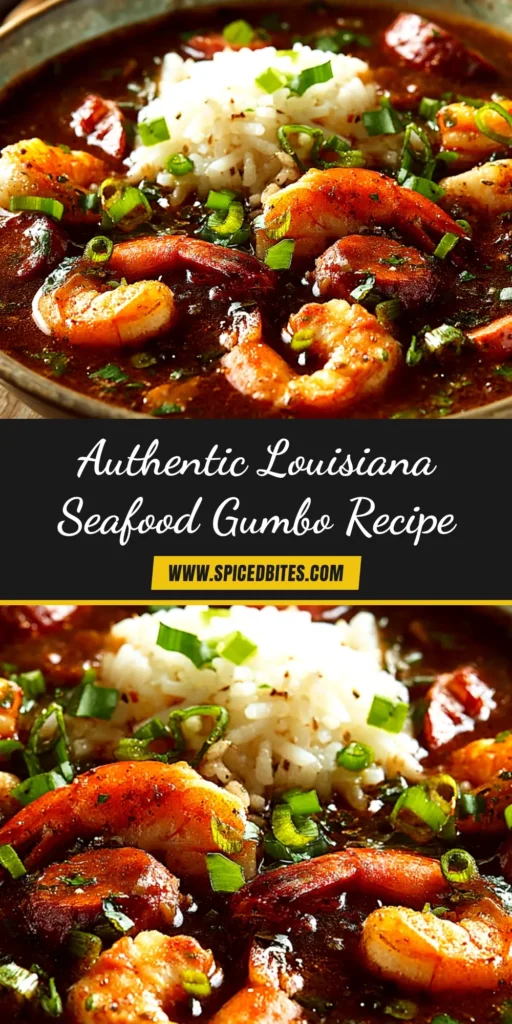
Louisiana Seafood Gumbo
Louisiana Seafood Gumbo: An Authentic Taste of the Bayou
Equipment
- 1 Large Heavy-Bottomed Pot or Dutch Oven
- 1 Whisk
- 1 Wooden Spoon
Ingredients
For the Roux
- 1 cup vegetable oil
- 1 cup all-purpose flour
For the Gumbo Base
- 2 cups yellow onion finely chopped
- 1 cup green bell pepper finely chopped
- 1 cup celery finely chopped
- 1 tablespoon garlic minced
Proteins & Liquid
- 1 lb andouille sausage sliced into 1/4-inch rounds
- 8 cups seafood stock warmed
- 2 lbs large shrimp peeled and deveined
- 1 lb lump crabmeat picked over for shells
- 1 pint fresh oysters undrained
Seasoning & Garnish
- 2 tablespoons Cajun seasoning
- 1 teaspoon dried thyme
- 2 bay leaves
- 1/2 cup fresh parsley chopped
- 1/2 cup green onions sliced
- Cooked white rice for serving
Instructions
- In a large, heavy-bottomed Dutch oven, heat the vegetable oil over medium heat. Gradually whisk in the flour until smooth. Cook, stirring constantly and scraping the bottom of the pot, for 25-45 minutes, until the roux is a dark chocolate brown color and has a nutty aroma. Be careful not to burn it.
- Add the chopped onion, bell pepper, and celery (the 'Holy Trinity') to the roux. Cook, stirring, for 5-7 minutes, until the vegetables are softened. This also helps to cool down the roux to prevent burning. Add the minced garlic and cook for another minute until fragrant.
- Slowly pour in the warmed seafood stock, one cup at a time, whisking continuously until each addition is fully incorporated and smooth. This prevents lumps from forming. Bring the mixture to a low boil.
- Add the sliced andouille sausage, Cajun seasoning, dried thyme, and bay leaves. Reduce the heat to low, cover, and let it simmer for at least 60 minutes, stirring occasionally, to allow the flavors to meld.
- Increase the heat to medium-low. Stir in the shrimp and cook for about 3-5 minutes until they turn pink. Gently fold in the lump crabmeat and the oysters with their liquor. Cook for just 2-3 minutes more, until the edges of the oysters begin to curl. Do not overcook.
- Remove the pot from the heat. Discard the bay leaves. Stir in the fresh parsley and green onions. Serve hot over a bed of white rice.
Notes
Seafood Quality: Use the freshest seafood you can find for the best flavor.
Storage: Gumbo tastes even better the next day! Store it in an airtight container in the refrigerator for up to 3 days.


