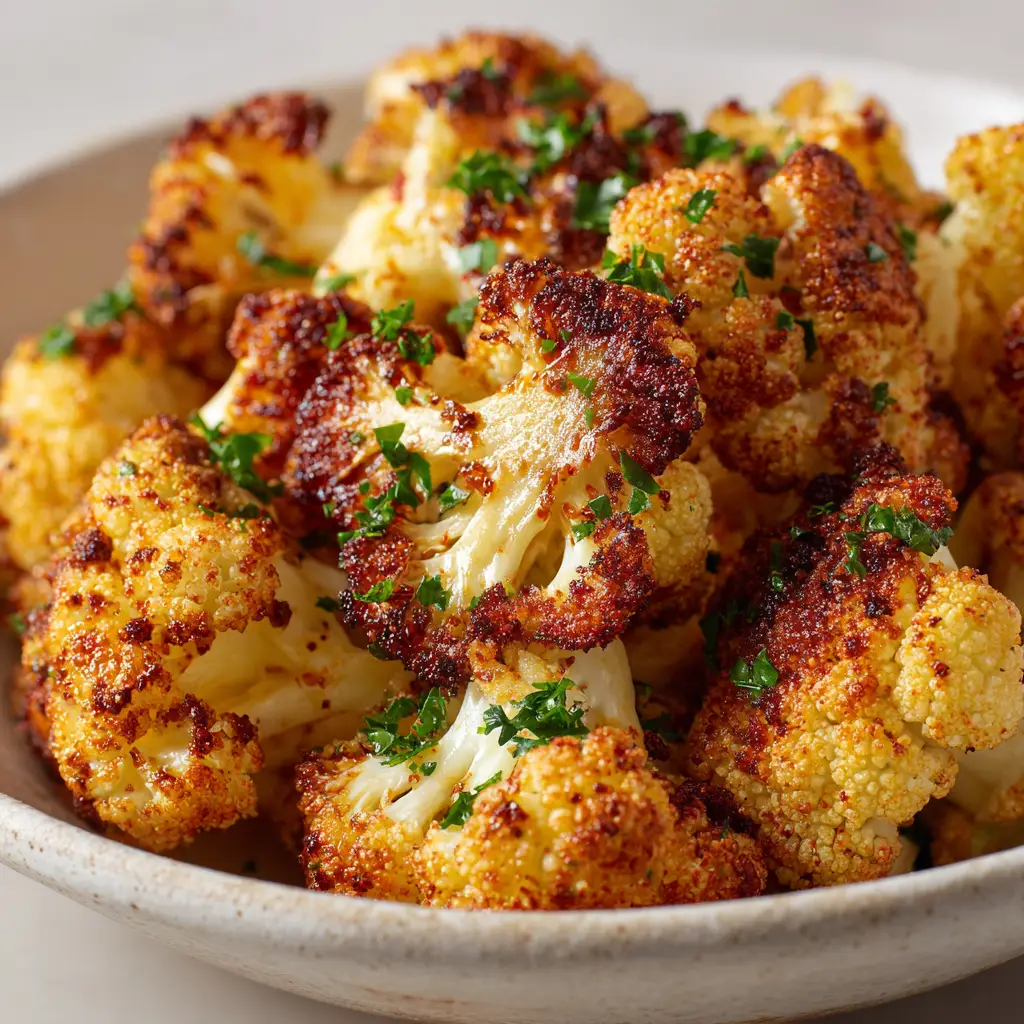
There is a profound culinary transformation that happens when the humble brassica meets high-intensity heat. This Crispy Roasted Cauliflower is not your average steamed side dish; it is a masterclass in texture, featuring tender cores and deep golden-brown, charred edges that provide a satisfying crunch in every bite.
The visual appeal is undeniable, characterized by a glistening olive oil sheen and a vibrant, reddish spice powder coating that clings to every crevice of the florets. Topped with distinct specks of cracked black pepper and a final flourish of freshly chopped green parsley, this dish looks as stunning in a rustic white ceramic bowl as it tastes on the palate.
Achieving this specific level of “shatter-crisp” exterior requires more than just luck. It requires an understanding of moisture evaporation and the Maillard reaction. In this guide, we will break down the science of roasting to ensure your cauliflower never turns out soggy or limp again.
The Anatomy of the Perfect Char: Why This Recipe Works
If you have struggled with mushy vegetables in the past, this approach will change your kitchen workflow forever. We focus on three pillars of vegetable roasting: surface area, heat conductivity, and spice adhesion.
- Extreme Caramelization: By roasting at a high temperature, we force the natural sugars in the cauliflower to caramelize, creating those sought-after dark golden charred edges described in our visual blueprint.
- Reddish Spice Profile: We utilize a specific blend of smoked paprika and garlic powder to achieve that signature reddish hue that looks incredible under soft natural daylight.
- Textural Contrast: The contrast between the softened, buttery interior and the “heavily crisped” exterior provides a professional-grade mouthfeel that pairs perfectly with savory pizza sliders.
- Visual Precision: Every element, from the olive oil sheen to the fine green flakes of parsley, is designed to create a photogenic, restaurant-quality presentation.
Essential Elements for Reddish-Spiced Cauliflower Excellence
To recreate the exact aesthetic of our visual blueprint, each ingredient serves a specific functional and aesthetic purpose. We do not use “fluff” ingredients; every item on this list is a structural necessity.
1 Large Head of Cauliflower (approx. 2 lbs or 900g): This is our canvas. Look for a head with tightly packed florets and no brown spots to ensure the freshest starting point.
3 tbsp (45ml) Extra Virgin Olive Oil: The oil is the heat conductor. It provides the glistening sheen seen in the photos and allows the spices to adhere to the craggy surfaces of the florets.
1.5 tsp (4g) Smoked Paprika: This is the secret to the reddish spice powder coating. It provides deep color and a subtle earthiness that complements the char.
1 tsp (3g) Garlic Powder: Garlic powder browns more evenly than fresh garlic in a high-heat oven, contributing to the savory flavor profile without burning.
1/2 tsp (1.5g) Onion Powder: This adds a foundational “umami” layer that makes the roasted cauliflower taste complex and deeply seasoned.
1 tsp (6g) Kosher Salt: Salt is essential for drawing out internal moisture, which then evaporates to allow the edges to become “heavily crisped.”
1/2 tsp (1g) Freshly Cracked Black Pepper: These “distinct specks” are a vital visual component of the blueprint, providing a sharp bite against the sweetness of the roasted vegetable.
2 tbsp (8g) Fresh Flat-Leaf Parsley: Finely chopped, these “vibrant green flakes” provide the final color contrast against the reddish-brown cauliflower.
Pro-Level Tools for High-Heat Roasting
To achieve the results seen in our handheld smartphone photo style, you need equipment that can handle and distribute heat effectively. Using the wrong pan can result in steaming rather than roasting.
A heavy-duty, rimmed half-sheet baking pan is non-negotiable. Aluminum is preferred for its even heat distribution, which prevents the bottoms from burning before the edges are charred.
You will also need a sharp chef’s knife to create flat surfaces on the cauliflower florets. These flat surfaces maximize contact with the pan, leading to a deeper golden-brown crust.

Architecting the Crunch: Step-by-Step Instructions
Phase 1: Precision Prepping and Cutting
Preheat your oven to 425°F (220°C). This high temperature is the only way to get those dark golden charred edges while keeping the core tender.
Break the cauliflower into bite-sized florets. Try to ensure each piece has at least one flat side; this is the culinary “secret” to achieving that heavy crisping mentioned in the visual prompt.
Wash the florets and—this is crucial—dry them completely with a clean kitchen towel. Any residual water will create steam, which is the enemy of the Crispy Roasted Cauliflower.
Phase 2: The Spice Coating and Emulsion
In a large mixing bowl, whisk together the olive oil, smoked paprika, garlic powder, onion powder, salt, and black pepper. This creates a reddish “slurry” that ensures even coverage.
Toss the florets into the bowl and use your hands or a spatula to massage the oil and spices into every nook and cranny. You want a generous, visible coating of the reddish spices.
Arrange the florets on the baking sheet. Do not crowd the pan! If the florets are touching, they will release steam and soften. They should have at least a half-inch of space between them.
Phase 3: The Roasting and Charring Sequence
Slide the pan into the center rack of the oven. Roast for 20 minutes without touching them. This allows the side in contact with the pan to develop a deep golden-brown crust.
Remove the pan and use a metal spatula to flip the florets. You should see a glistening roasted sheen and the beginnings of those charred edges.
Roast for another 10-15 minutes. Listen for a slight sizzling sound—this is the sound of the moisture leaving the vegetable and the edges becoming “heavily crisped.”
Phase 4: The Final Flourish
Once the cauliflower is tender at the core but dark and crispy on the edges, remove the pan from the oven. Immediately sprinkle with the freshly chopped green parsley.
The residual heat will wake up the oils in the parsley, releasing a fresh aroma that cuts through the richness of the roasted spices. Transfer to a rustic white ceramic bowl for serving.
Culinary Troubleshooting: Tips for Success
- The Crowding Rule: If you are doubling the recipe, use two separate baking sheets. A crowded pan is the #1 reason for soggy cauliflower.
- Oil Balance: If the cauliflower looks dry rather than having an “olive oil sheen,” you may have used a particularly large head. Add an extra teaspoon of oil if needed.
- Mandatory Preheating: Never put your vegetables in a cold oven. The initial blast of heat is what “sears” the exterior to trap the tender core.
- Spice Variations: While the reddish spice rub is essential for this visual look, you can add a pinch of cayenne if you prefer a spicier finish.
How to Store and Reheat Your Roasted Florets
Roasted vegetables are always best fresh from the oven, but you can store leftovers in an airtight container in the refrigerator for up to 4 days. The exterior will soften as it sits.
To restore the Crispy Roasted Cauliflower to its former glory, do not use the microwave. Instead, place them back on a baking sheet at 400°F (200°C) for 5-7 minutes until they sizzle.
This recipe does not freeze well, as the cell structure of the cauliflower breaks down, leading to a mushy texture upon thawing. It is best enjoyed as a fresh, high-protein side dish.
Perfect Pairings for a Complete Meal
This versatile side dish complements a wide variety of main courses. The earthy, smoky flavors of the reddish spice rub make it an ideal partner for smothered chicken or even a light pasta dish.
If you are looking for a vegetarian feast, serve this alongside spinach and ricotta manicotti. The acidity of a tomato sauce cuts through the roasted richness beautifully.
For a quick weeknight dinner, we love tossing these florets into ground beef taco bowls for extra texture and a boost of cruciferous nutrients.
Frequently Asked Questions
While you can roast frozen cauliflower, it is very difficult to achieve the ‘heavily crisped’ edges of fresh cauliflower. Frozen versions tend to release more moisture, resulting in a softer texture.
The secret is creating an emulsion with the olive oil and spices in a large bowl first. By tossing the florets in the bowl rather than sprinkling spices on the tray, you ensure every crevice is coated for maximum flavor.
No, you should never boil or blanch cauliflower before roasting if you want a crispy result. The oven’s high heat is sufficient to cook the core while the dry environment creates the charred, golden edges.
The vibrant reddish hue comes from the combination of smoked paprika and high-heat roasting. This spice rub not only adds color but also a deep, earthy flavor that complements the natural sweetness of the vegetable.
Sogginess is usually caused by two things: residual water from washing or crowding the pan. Ensure the florets are bone-dry before oiling and give them plenty of space on the baking sheet to allow steam to escape.
The Ultimate Crispy Roasted Cauliflower Recipe
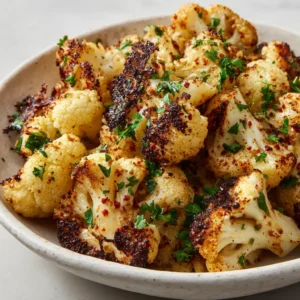
Crispy Roasted Cauliflower with Reddish Spice Rub and Fresh Parsley
Equipment
- 1 Rimmed baking sheet Large, heavy-duty aluminum preferred.
- 1 Large mixing bowl For tossing florets in spice rub.
Ingredients
Ingredients
- 1 large head Cauliflower Approx. 2 lbs (900g), cut into florets
- 3 tbsp Extra Virgin Olive Oil (45ml)
- 1.5 tsp Smoked Paprika (4g)
- 1 tsp Garlic Powder (3g)
- 0.5 tsp Onion Powder (1.5g)
- 1 tsp Kosher Salt (6g)
- 0.5 tsp Black Pepper (1g), freshly cracked
- 2 tbsp Fresh Parsley (8g), finely chopped for garnish
Instructions
Preparation and Roasting
- Preheat your oven to 425°F (220°C). Wash the cauliflower head and dry thoroughly. Cut into uniform bite-sized florets, ensuring many have flat sides for maximum pan contact.
- In a large bowl, whisk olive oil with smoked paprika, garlic powder, onion powder, salt, and pepper. Add cauliflower and toss until every floret has a visible reddish spice coating.
- Spread the cauliflower on a baking sheet in a single layer with space between pieces. Roast for 20 minutes until the bottoms are deep golden-brown.
- Flip the florets and roast for another 10-15 minutes until edges are charred and heavily crisped with a glistening sheen.
- Remove from oven and immediately sprinkle with fine, vibrant green flakes of freshly chopped parsley. Serve in a rustic bowl.
Notes
Avoid crowding the pan; use two sheets if necessary to prevent steaming.
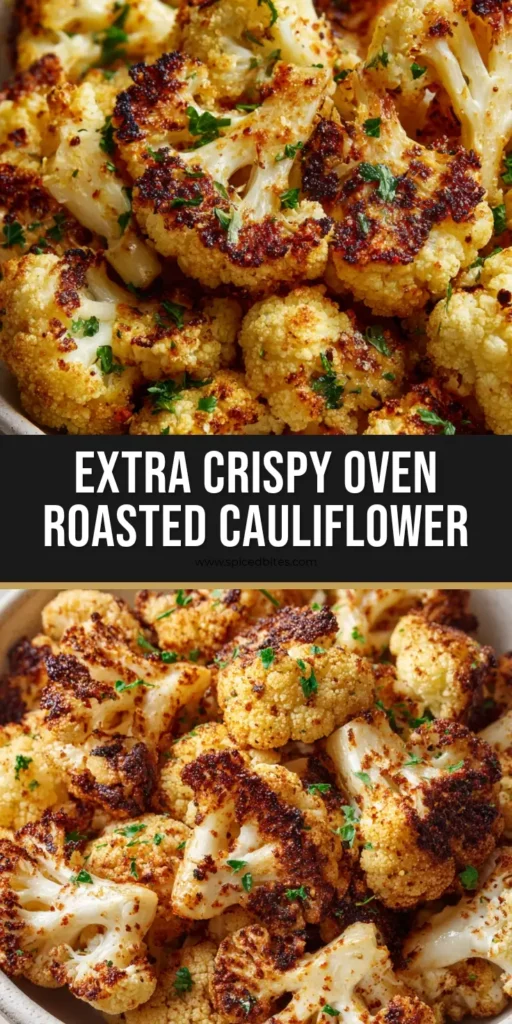
Join the Spiced Bites Community!
This Crispy Roasted Cauliflower is more than just a vegetable; it is a testament to how simple ingredients can create extraordinary results when proper technique is applied. Whether you are serving this for a family dinner or a weekend gathering, it is sure to be the star of the table.
If you enjoyed this recipe, please leave a comment below and let us know how your char turned out! Don’t forget to sign up for our newsletter for more kitchen science and flavor-packed recipes. You can also save this recipe to your boards on Pinterest to keep it handy for your next meal prep session!
Happy roasting!