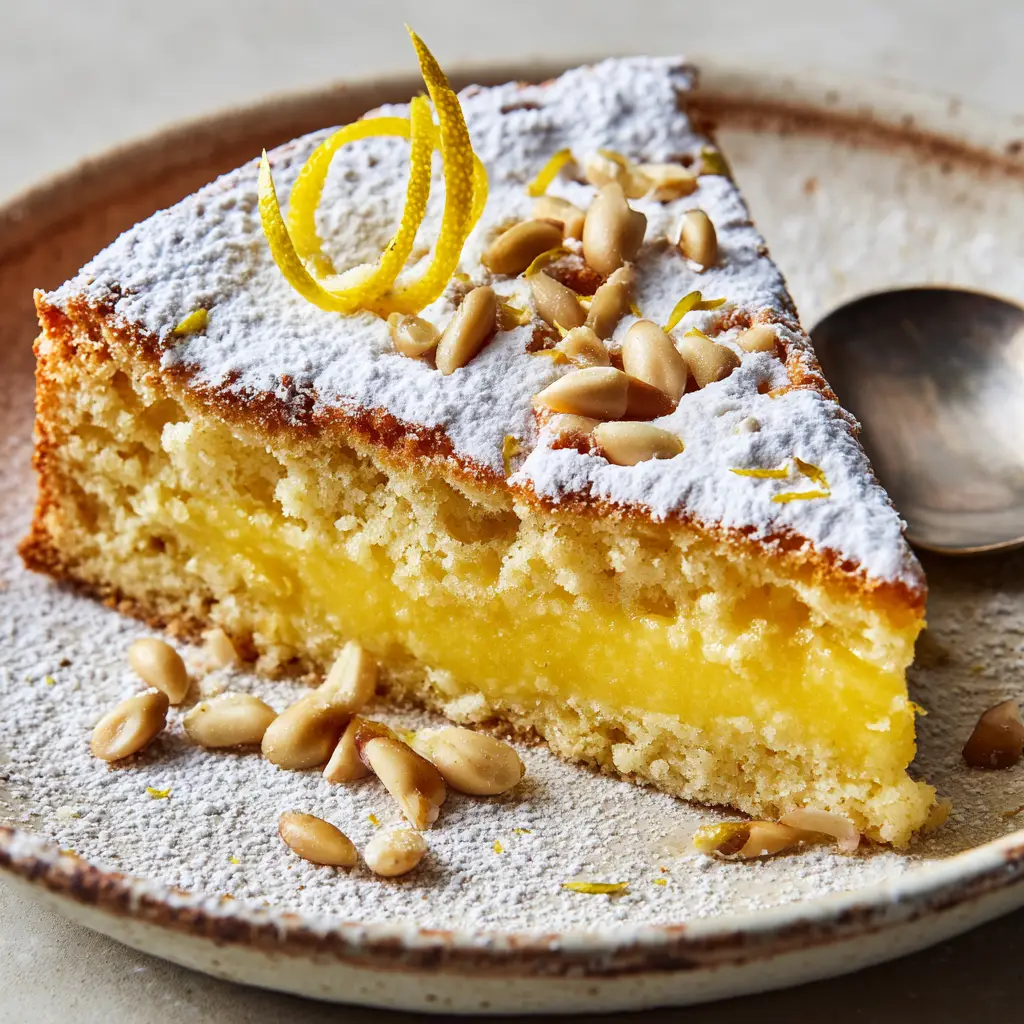
There is something inherently soul-soothing about a classic Lemon Custard Cake. This isn’t just a dessert; it is a sensory journey through the sun-drenched groves of the Amalfi Coast. Imagine a rustic, thick slice sitting on a vintage ceramic plate, its buttery edges glowing with a perfect golden-brown hue. This Italian-inspired masterpiece combines the structural integrity of a crumbly shortcrust pastry with the ethereal softness of a vibrant, lemon-infused center.
Every bite of this Lemon Custard Cake offers a symphony of textures. You first encounter the delicate snap of the pasta frolla, followed immediately by the velvet-smooth embrace of a thick custard. Topped with a snowy dusting of powdered sugar and the earthy crunch of toasted pine nuts, it is a dessert designed to linger on the palate and the mind. Whether you are hosting a sophisticated garden party or seeking a comforting weekend project, this recipe delivers a professional-grade result that looks like it stepped right out of a high-end trattoria.
Our culinary forensics team has meticulously deconstructed the perfect citrus torte to ensure your kitchen produces a result identical to our visual blueprint. From the specific “wobble” of the custard to the exact shade of the toasted nuts, we have left nothing to chance. Prepare to master the balance of acid and fat in this definitive guide to the ultimate citrus indulgence.
Why This Silky Lemon Custard Cake is the Queen of Citrus Desserts
- Structural Perfection: The recipe features a robust, golden-brown shortcrust pastry base that provides the necessary “crunch” to contrast the soft filling.
- Vibrant Flavor Profile: We use both fresh-squeezed juice and concentrated zest to achieve a thick, smooth yellow lemon custard that tastes like pure sunshine.
- Elegant Visual Cues: Between the white powdered sugar dusting and the fresh lemon zest curl, this cake is a masterclass in rustic food styling.
- Textural Contrast: The addition of lightly toasted pine nuts provides a sophisticated, buttery nuttiness that elevates the lemon’s natural acidity.
The Anatomy of a Perfect Italian Torte: Essential Ingredients
To achieve the visual and textural heights of this Lemon Custard Cake, you must understand the role each ingredient plays. We focus on high-quality fats and precise citrus ratios to ensure a bake that is both sturdy and melt-in-your-mouth tender.
All-Purpose Flour (375g / 3 cups): This provides the structural foundation for our shortcrust. Its moderate protein content ensures a pastry that is crumbly rather than chewy.
Unsalted Butter (225g / 1 cup): Use high-fat European-style butter if possible. It is the secret to that “golden-brown” finish and the rich, melt-in-the-mouth quality of the crust.
Granulated Sugar (200g / 1 cup): Divided between the crust and the filling, sugar doesn’t just sweeten; it tenderizes the dough and helps the custard set with a glossy finish.
Fresh Egg Yolks (6 large yolks): These are non-negotiable for achieving that “vibrant yellow” custard center. Yolks provide the emulsifiers needed for a thick, smooth texture.
Whole Milk (500ml / 2 cups): The base of our custard. Whole milk provides the necessary fat for a luxurious mouthfeel that skim or 2% simply cannot replicate.
Fresh Lemons (3-4 large): You will need both the juice for the custard and long, elegant strips of zest for the final “lemon zest curl” garnish. Freshness is paramount here.
Cornstarch (40g / 5 tbsp): This is our invisible structural hero. It thickens the lemon custard to that perfect “thick smooth” consistency that holds its shape when sliced.
Pine Nuts (30g / 1/4 cup): These provide the “lightly toasted golden” accents seen in our visual prompt. Their resinous, buttery flavor is the traditional Italian finishing touch.
Powdered Sugar (for dusting): A generous coating creates that “white powdered sugar dusting” that contrasts so beautifully against the golden crust.
Professional Tools for a Flawless Golden Crust
Achieving a professional-grade Lemon Custard Cake requires more than just ingredients; it requires the right environment for those ingredients to succeed. You will need a 9-inch (23cm) tart pan with a removable bottom to ensure you can extract the cake without breaking the delicate shortcrust.
A heavy-bottomed saucepan is essential for the custard to prevent scorching. For the pastry, a food processor can help cut the butter into the flour quickly, keeping the fat cold and the crust flaky. Finally, a fine-mesh sieve is vital for straining the custard, ensuring it remains “thick and smooth” without any stray bits of cooked egg or zest clumps.
Crafting the Buttery Shortcrust Base (Pasta Frolla)
The secret to a rustic Lemon Custard Cake lies in the pasta frolla. Start by pulsing your cold, cubed butter with the flour and a pinch of salt until the mixture resembles coarse sand. Add 100g (1/2 cup) of sugar and two egg yolks, pulsing just until the dough begins to clump together. It should look like large, damp crumbs.
Turn the dough onto a lightly floured surface and press it into a disc. Do not overwork it! Wrap it in plastic and chill for at least 30 minutes. This rest period allows the gluten to relax, preventing the crust from shrinking in the oven and ensuring it retains its crumbly, buttery texture.
Once chilled, roll the dough out to a 12-inch (30cm) circle. Drape it over your tart pan, pressing firmly into the fluted edges. Trim the excess, but leave a slight overhang to account for minor shrinkage. Prick the base with a fork—this “docking” prevents steam from lifting the crust during the initial bake.

Achieving the Vibrant, Velvety Lemon Filling
While the crust chills, focus on the “vibrant yellow lemon custard.” In your heavy saucepan, whisk together 4 egg yolks and the remaining sugar until pale and thick. Sift in the cornstarch, whisking until no lumps remain. Slowly stream in the milk while whisking constantly to create a smooth emulsion.
Place the pan over medium-low heat. This is the “sensory cue” phase: you must stir constantly with a silicone spatula. You will feel the custard thicken against the bottom of the pan. As soon as it reaches a slow boil and coats the back of a spoon with a “thick, smooth” consistency, remove it from the heat. Stir in 60ml (1/4 cup) of fresh lemon juice and a tablespoon of zest. The color will transform into a brilliant, sunny yellow.
Before filling the cake, strain the custard through a fine-mesh sieve. This forensic step ensures the “thick smooth” visual requirement is met perfectly, removing any micro-lumps for a professional finish.
Mastering the Bake: Achieving That Rustic Golden Glow
Preheat your oven to 350°F (175°C). Pour the warm custard into the prepared shortcrust shell. If you have leftover dough, you can create a lattice or simply leave it open-faced for that “rustic slice” look. Place the cake in the center of the oven.
Bake for 35-40 minutes. Watch for the visual cues: the pastry edges should transition from pale cream to a “golden-brown shortcrust” color. The custard should be set around the edges but still possess a slight, jelly-like wobble in the very center. This wobble is the hallmark of a cake that won’t be rubbery once cooled.
During the last 5 minutes of baking, scatter the pine nuts over the top. This allows them to become “lightly toasted golden” without burning. The heat will release their natural oils, scenting the entire cake with a nutty, Mediterranean aroma.
Expert Secrets for a Crisp Base and Smooth Center
- Cold is Key: Ensure your butter and egg yolks for the crust are refrigerator-cold. This creates tiny pockets of fat that steam during baking, resulting in a crumbly, short texture.
- The Sieve Step: Never skip straining your custard. Even the most careful whisking can leave tiny bits of chalazae (egg white strands) that ruin the “thick smooth” mouthfeel.
- Tame the Acid: Add the lemon juice after the custard has thickened on the heat. Adding it too early can sometimes interfere with the starch’s ability to thicken the milk.
- The Carry-Over Cook: The Lemon Custard Cake will continue to firm up as it cools. Resist the urge to overbake, or the custard may crack.
How to Preserve Your Citrus Masterpiece
This Lemon Custard Cake is best enjoyed the day it is made to maintain the contrast between the crisp crust and soft filling. However, it can be stored in the refrigerator for up to 3 days. Cover it loosely with foil; avoid plastic wrap directly on the surface, as it can ruin the “smooth” visual of the custard.
Before serving leftovers, let the cake sit at room temperature for 15 minutes. This softens the butter in the crust, restoring that rustic, crumbly texture. We do not recommend freezing this cake, as the custard’s molecular structure can break down, leading to a “weeping” effect upon thawing.
What to Serve: Completing Your Italian Feast
To truly embrace the Italian spirit, serve this cake as the finale to a bright, savory meal. It pairs exceptionally well after a main course of baked Italian angel chicken, where the herbal notes of the chicken prepare the palate for the citrus punch of the dessert.
If you are looking for a lighter dinner option before indulging, consider a bowl of creamy broccoli potato soup. The earthy greens provide a wonderful counterpoint to the sweet and tart lemon. For those who love citrus-themed gatherings, you might even offer a side-by-side tasting with a coconut ricotta cake to explore different Mediterranean textures.
If you’re hosting a more casual crowd, these pizza sliders make for a fun, easy-to-prep appetizer that keeps the Italian theme alive before the “rustic slice” of Lemon Custard Cake takes center stage.
Your Questions Answered: The Lemon Custard Cake Masterclass
While possible, it is highly discouraged. Bottled juice often has a metallic aftertaste and lacks the bright, floral notes of fresh lemons. For the vibrant yellow color and authentic flavor of a true Lemon Custard Cake, fresh juice and zest are essential.
To avoid a soggy base, ensure your oven is fully preheated and consider blind-baking the crust for 10 minutes before adding the filling. Also, make sure the custard has cooled slightly before pouring it into the pastry shell.
They are very similar! Traditional Torta della Nonna (Grandmother’s Cake) is often filled with a vanilla or lemon-scented pastry cream and topped with pine nuts. This recipe is a lemon-forward variation that emphasizes the citrus profile.
Pine nuts have a high oil content and transition from golden to burnt very quickly. Always add them during the final 5 minutes of baking or toast them separately in a dry pan over medium heat for 2-3 minutes until just fragrant.
Custard usually fails to thicken if it hasn’t reached a sufficient temperature to activate the cornstarch. Ensure the mixture reaches a gentle boil while whisking constantly. Additionally, adding too much lemon juice too early can sometimes inhibit the thickening process.
The Official Lemon Custard Cake Recipe Card
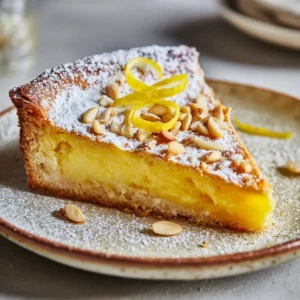
Lemon Custard Cake: The Ultimate Italian Shortcrust Torte
Equipment
- 1 9-inch Tart Pan with Removable Bottom Essential for easy removal
- 1 Heavy-bottomed saucepan Prevents custard scorching
- 1 Fine-Mesh Sieve For a smooth, lump-free custard
Ingredients
Shortcrust Pastry (Pasta Frolla)
- 375 g (3 cups) All-purpose flour Plus extra for dusting
- 225 g (1 cup) Unsalted butter Cold, cubed
- 100 g (1/2 cup) Granulated sugar
- 2 large Egg yolks Cold
Lemon Custard Filling
- 500 ml (2 cups) Whole milk
- 4 large Egg yolks Room temperature
- 100 g (1/2 cup) Granulated sugar
- 40 g (5 tbsp) Cornstarch
- 60 ml (1/4 cup) Fresh lemon juice Approx. 2 lemons
- 1 tbsp Lemon zest Finely grated
Finishing Touches
- 30 g (1/4 cup) Pine nuts Lightly toasted
- 2 tbsp Powdered sugar For dusting
- 1 large Lemon zest curl Garnish
Instructions
Prepare the Shortcrust
- Pulse flour and cold butter in a food processor until it looks like sand. Add sugar and yolks; pulse until large clumps form.
- Press dough into a disc, wrap in plastic, and refrigerate for 30 minutes to relax the gluten.
Cook the Custard
- Whisk yolks, sugar, and cornstarch. Gradually whisk in milk. Heat over medium-low, stirring constantly until thick and smooth.
- Remove from heat. Stir in lemon juice and zest. Strain through a fine-mesh sieve into a clean bowl.
Assemble and Bake
- Roll out pastry and line the tart pan. Pour the warm lemon custard into the shell.
- Bake at 350°F (175°C) for 35-40 minutes until edges are golden-brown and the center has a slight wobble.
- Add pine nuts in the last 5 minutes. Cool completely, then dust with powdered sugar and garnish with a lemon zest curl.
Notes
Don't skip straining the custard; it's the only way to guarantee that professional 'thick smooth' texture.
The Final Flourish: Serve and Share
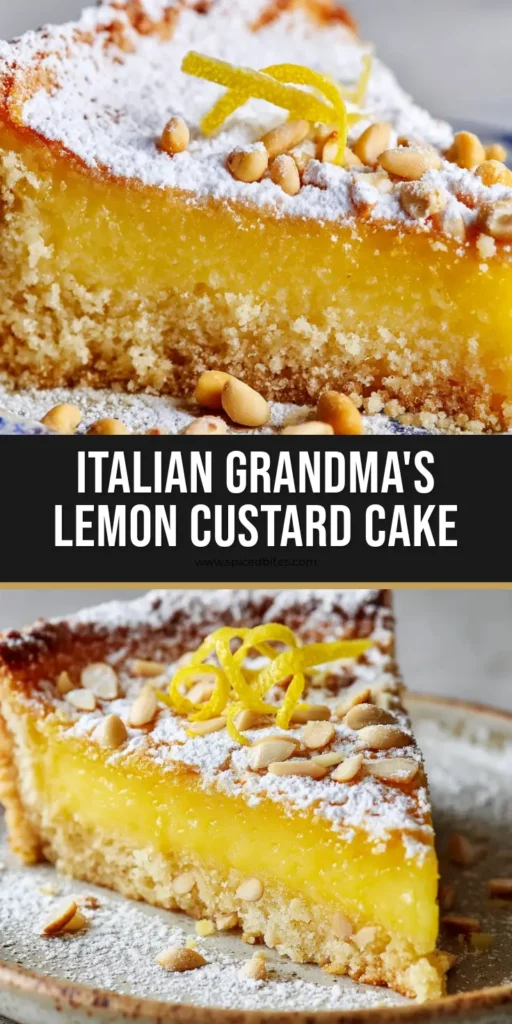
Once your Lemon Custard Cake has cooled completely, it is time for the forensic finishing touches. Use a fine sifter to apply a “generous layer of white powdered sugar” across the entire surface. Finally, take a vegetable peeler and create a single, elegant “curled strip of fresh yellow lemon zest” to place right in the center of the cake or on the individual slice.
This dessert is a testament to the beauty of simple, high-quality ingredients treated with respect. The vibrant yellow center and golden crust are more than just food; they are a visual promise of the delicious experience to come. If you enjoyed crafting this Italian treasure, please leave a comment below and share your results! Don’t forget to pin this recipe to your dessert boards on Pinterest so you can find it for your next celebration.
For more decadent treats, check out our cinnamon roll cheesecake chimichangas for a fusion twist on classic creamy fillings!