There is a specific kind of magic that happens when a hot, stainless steel pan meets a perfectly seasoned white fish fillet. The sizzle is immediate, promising a golden-brown crust that yields to buttery, flaky layers underneath.
This Ginger Soy Fish isn’t just another weeknight dinner; it is a masterclass in balancing textures and temperatures. Imagine a thick, glossy dark brown glaze clinging to the fish, with its soy-forward saltiness tempered by the sharp, aromatic bite of fresh julienned ginger.
When served over a bed of fluffy jasmine rice and bright green steamed baby bok choy, the glaze pools slightly at the edges, inviting you to mix every component together. The final touch—the crunch of toasted sesame seeds and the snap of fresh scallions—transforms a simple meal into a restaurant-quality experience.
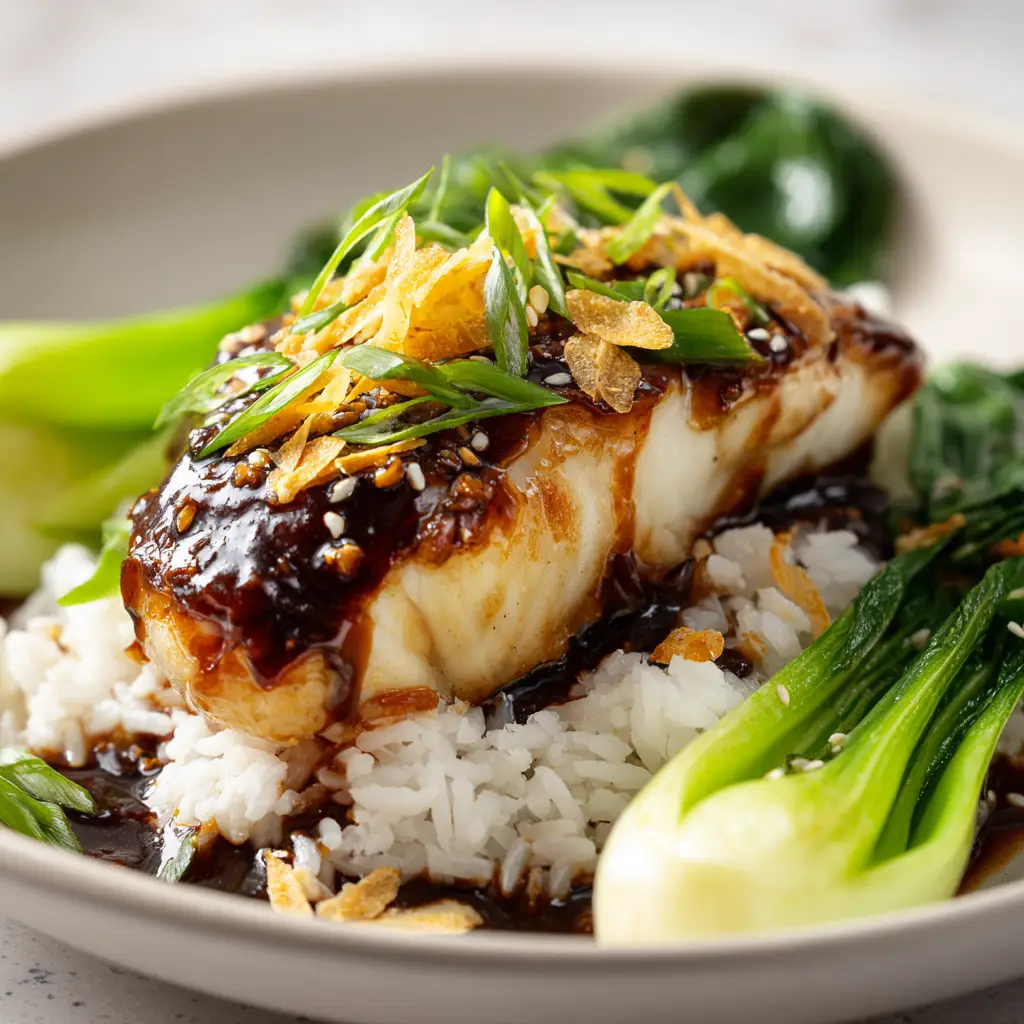
Why You Will Crave This Pan-Seared Masterpiece
- The Perfect Sear: We use high-heat techniques to ensure the white fish develops a resilient crust while remaining incredibly moist inside.
- The “Liquid Gold” Glaze: A dark, viscous, and glossy ginger soy reduction that provides an intense umami punch and stunning visual appeal.
- Textural Harmony: Every bite features the crunch of fresh ginger strips, the softness of steamed bok choy, and the fluffiness of jasmine rice.
- Nutrient Dense: This recipe is a lean, high-protein powerhouse that feels indulgent without the heavy calorie count found in creamy sauces.
The Anatomy of Flavor: Essential Ingredients for Ginger Soy Fish
White Fish Fillets: Choose a firm, flaky variety like Cod, Halibut, or Snapper. These hold up beautifully to searing and provide the perfect canvas for our Ginger Soy Fish glaze.
Low-Sodium Soy Sauce: This forms the base of our dark brown sauce. Using low-sodium allows us to control the salt levels while concentrating the deep fermented flavors during the reduction.
Dark Brown Sugar: Essential for that glossy, mirror-like finish. The molasses content in the sugar creates the “thick, dark brown” appearance described in our visual blueprint.
Fresh Ginger: You will need this in two forms: grated into the sauce for depth, and julienned into fine “matchstick” strips for a pungent, aromatic garnish.
Baby Bok Choy: These are halved and steamed until the leaves are wilted but the bulbs maintain a satisfying, juicy snap. It is the ultimate green companion for seafood.
Jasmine Rice: Long-grain and aromatic, this rice is a sponge for the soy glaze that pools at the bottom of the plate. If you enjoy diverse textures, you might also like this garlic-infused ramen as a side inspiration.
Toasted White Sesame Seeds: These provide a nuttiness and a visual “pop” against the dark glaze. Do not skip the toasting, as it releases the essential oils.
Fresh Scallions: Sliced diagonally to create long, elegant green ribbons. This technique increases the surface area for maximum onion flavor.
Neutral Oil: Use Grapeseed or Avocado oil. These have high smoke points, allowing you to sear the fish at the necessary temperature without the oil breaking down.
Professional Tools for a Flawless Finish
To achieve the visual result seen in our photos, a heavy-bottomed non-stick or well-seasoned cast iron skillet is non-negotiable. This ensures the fish releases easily without tearing the delicate flesh.
You will also need a sharp mandoline or a very steady chef’s knife for those fine ginger strips. A bamboo steamer or a simple pot with a steamer insert will keep your bok choy vibrantly green.
The Step-by-Step Path to the Perfect Ginger Soy Fish
1. Preparing the Aromatic Foundation
Start by rinsing 1.5 cups (300g) of jasmine rice until the water runs clear. Cook it according to package instructions so it is fluffy and ready to catch the glaze.
While the rice simmers, peel your ginger. Grate 1 tbsp (15g) for the sauce, then carefully slice a 2-inch (5cm) piece into paper-thin planks, then into needle-like matchsticks for the final garnish.
2. Crafting the Glossy Ginger Soy Reduction
In a small saucepan, combine 1/2 cup (120ml) soy sauce, 1/4 cup (50g) dark brown sugar, your grated ginger, and 1 tsp (5ml) of rice vinegar. Whisk in a slurry of 1 tsp (3g) cornstarch mixed with 1 tbsp (15ml) water.
Simmer over medium-low heat for 5-7 minutes. You are looking for the sauce to coat the back of a spoon with a thick, syrupy consistency and a dark, reflective sheen.

3. Searing the Fish for Maximum Texture
Pat your fish fillets (about 6oz/170g each) completely dry with paper towels. This is the secret to a professional sear. Season lightly with salt and white pepper.
Heat 2 tbsp (30ml) of oil in your skillet over medium-high heat. Once the oil begins to shimmer, lay the fish away from you. Let it sear undisturbed for 4-5 minutes until a deep golden-brown crust forms.
Flip the fish gently. Reduce the heat to medium and cook for another 2-3 minutes. During the final minute, brush a small amount of the glaze over the top to begin the lacquer process.
4. Steaming the Baby Bok Choy
While the fish finishes, place your halved baby bok choy into a steamer basket over boiling water. Steam for 3-4 minutes. They should be bright green and just tender to the bite.
If you enjoy healthy, vegetable-forward meals that pair well with seafood, consider exploring this low-country crab stew for your next coastal-inspired dinner party.
5. The Art of Assembly
On a minimalist white ceramic plate, create a generous bed of jasmine rice. Arrange 2-3 halves of steamed bok choy to one side.
Place the seared fish fillet atop the bok choy and rice. Pour the remaining thick ginger soy glaze over the fish, allowing it to cascade down the sides and pool slightly into the rice.
Garnish with a handful of the diagonally sliced scallions, a nest of julienned ginger strips, and a scatter of toasted sesame seeds.
Expert Tips for Success
- Dryness is Key: Any moisture on the surface of the fish will create steam, preventing that iconic “pan-seared” crust. Use more paper towels than you think you need!
- Don’t Crowd the Pan: If you are making multiple fillets, sear them in batches. Overcrowding drops the pan temperature and results in grey, boiled-looking fish.
- Watch the Sugar: The glaze contains brown sugar. Keep the heat controlled so it thickens into a syrup rather than burning into a bitter caramel.
- Resting: Let the fish rest for 2 minutes before serving. This allows the juices to redistribute, ensuring every bite is succulent.
Storage, Reheating, and Meal Prep
Seafood is always best enjoyed immediately, but you can store leftovers in an airtight container for up to 2 days. To reheat, avoid the microwave, which can make the fish rubbery.
Instead, place the fish and rice in a covered skillet with a splash of water or extra soy sauce over low heat. This gently steams the components back to life without overcooking the protein.
What to Serve with Ginger Soy Fish
This dish is a complete meal on its own, but it pairs beautifully with other light, flavorful options. For a well-rounded weeknight, you might start with creamy angel chicken as a meal-prep lunch earlier in the week.
For dessert, the savory-sweet profile of the fish is perfectly followed by something bright and citrusy, like a bright lemon custard cake. If you prefer a lighter snack, these wholesome oat cookies are a great way to end the evening on a healthy note.
Frequently Asked Questions
Yes! Simply swap the soy sauce for Tamari or liquid aminos. Ensure your cornstarch is certified gluten-free, and you’ll have a perfect gluten-free Ginger Soy Fish.
Absolutely. Just ensure the fish is completely thawed and, most importantly, patted extremely dry. Frozen fish tends to release more moisture, so extra drying is required for a good sear.
The secret is the combination of dark brown sugar and a cornstarch slurry. Simmering the sauce allows the sugar to caramelize slightly and the cornstarch to activate, creating that ‘thick, dark brown’ mirror finish.
Firm white fish fillets like Cod, Halibut, Sea Bass, or Snapper work best because they maintain their structure during searing and have a clean flavor that complements the bold ginger soy glaze.
Sticking usually happens if the fish is too wet or the pan isn’t hot enough. Always pat the fish dry with paper towels and wait for the oil to shimmer before adding the protein.
The Ultimate Ginger Soy Fish Recipe Card
Ginger Soy Fish with a Glossy Umami Glaze and Steamed Bok Choy
Equipment
- 1 Non-stick skillet Heavy-bottomed for even searing.
- 1 Steamer Basket For the baby bok choy.
- 1 Small saucepan To reduce the ginger soy glaze.
Ingredients
Recipe Ingredients
- 2 6oz (170g) fillets White Fish Cod, Halibut, or Snapper
- 1/2 cup (120ml) Low-Sodium Soy Sauce
- 1/4 cup (50g) Dark Brown Sugar Packed
- 1 tbsp (15g) Fresh Ginger Grated
- 1 tsp (3g) Cornstarch Mixed with 1 tbsp water
- 4 heads Baby Bok Choy Halved lengthwise
- 1.5 cups (300g) Jasmine Rice Uncooked
- 2 tbsp (30ml) Neutral Oil Grapeseed or Avocado oil
- 2 stalks Green Scallions Diagonally sliced
- 2 inch piece Fresh Ginger Julienned into matchsticks
- 1 tbsp (9g) White Sesame Seeds Toasted
Instructions
Preparation
- Cook the jasmine rice according to package instructions until fluffy.
- Combine soy sauce, brown sugar, grated ginger, and cornstarch slurry in a small pan. Simmer until thick and glossy, about 5-7 minutes.
Cooking
- Pat fish dry. Heat oil in a skillet over medium-high. Sear fish for 4-5 minutes on the first side until a deep crust forms. Flip and cook 2-3 minutes more.
- Steam halved baby bok choy for 3-4 minutes until bright green and tender.
Plating
- Layer rice, bok choy, and fish. Pour glaze over the top so it pools on the rice. Garnish with julienned ginger, scallions, and sesame seeds.
Notes
Use a high-smoke point oil like avocado oil for the best searing results.
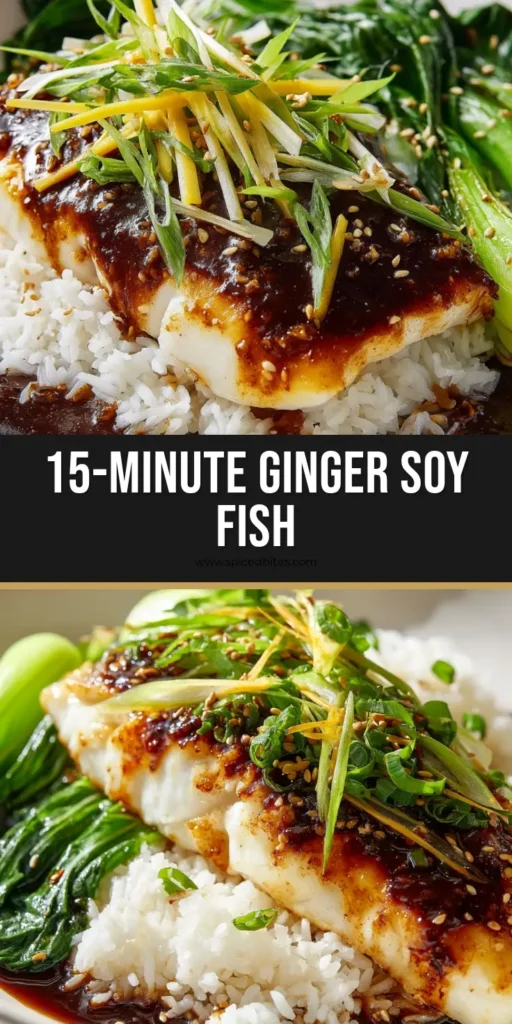
Join the Spiced Bites Community!
Mastering the art of the perfect sear takes practice, but once you see that thick, dark glaze over your Ginger Soy Fish, you’ll never go back to basic recipes. This dish balances sophisticated flavors with simple techniques that any home cook can master.
Did you try this recipe? We want to hear about it! Leave a comment below or share your gorgeous plate on Pinterest. For more culinary inspiration, sign up for our weekly newsletter where we break down the science of delicious home cooking.
Happy cooking, and enjoy every flaky, ginger-infused bite!


