Unlock the secrets to crafting a truly exceptional spirit with our comprehensive Grape Moonshine Recipe. This guide is designed for the enthusiastic home cook, breaking down the traditional art of distillation into simple, manageable steps. Whether you’re using fresh-picked grapes or quality juice, we’ll walk you through creating a smooth, fruit-forward moonshine that’s perfect for savoring. Get ready to transform simple ingredients into a remarkable homemade spirit.
Why You’ll Love This Grape Moonshine Recipe
This isn’t just a recipe; it’s an experience. If you’ve ever been curious about the distillation process, this guide is your perfect entry point. It demystifies the craft, focusing on safety, clarity, and most importantly, flavor. The result is a clean, aromatic spirit with the unmistakable essence of ripe grapes. It’s a rewarding project that yields a unique product you can’t find in stores.

Understanding the Basics: Is Making Moonshine Legal?
Before we begin, let’s address the most important question. In the United States and many other countries, distilling alcohol at home for consumption is illegal without the proper federal, state, and local permits. This recipe is provided for informational and educational purposes only. Always be aware of and comply with the laws in your location. For legal distilling, you can obtain permits to produce ethanol for fuel or essential oils.
Choosing the Best Grapes for Your Moonshine
The heart of any great Grape Moonshine Recipe is, of course, the grapes. The type of grape you choose will have the biggest impact on the final flavor of your spirit. Concord grapes are a popular choice due to their bold, classic grape flavor and high sugar content. Muscadine grapes also work wonderfully, lending a unique musky and sweet profile. Ultimately, any wine grape or even a quality table grape can be used.
Fresh Grapes vs. Grape Juice
You can achieve fantastic results with either fresh grapes or store-bought juice. Using fresh, crushed grapes will give you a more complex, artisanal flavor. However, using 100% pure grape juice (with no added preservatives like potassium sorbate or sodium benzoate, which can kill yeast) is a fantastic shortcut that saves time and effort while still producing a delicious moonshine.
Essential Equipment for Your First Batch
Having the right tools is crucial for both safety and success. You don’t need a massive setup, but you will need a few key items. For a successful run of our grape moonshine recipe, you will need a fermenter, an airlock, a still, a hydrometer, and cheesecloth.
- Fermenter: A food-grade bucket or carboy large enough to hold your mash with some headspace.
- Airlock: This allows CO2 to escape during fermentation without letting contaminants in.
- Still: A quality pot still is ideal for retaining the rich fruit flavors.
- Hydrometer: Essential for measuring the specific gravity to track fermentation and calculate alcohol content.
- Cheesecloth or Strainer: For separating the liquid from the grape solids before distillation.

Ingredients for the Perfect Grape Moonshine
This recipe is designed for a 5-gallon mash, which is a manageable size for beginners. The simplicity of the ingredients allows the natural grape flavor to shine through.
- Grapes or Grape Juice: About 25 pounds of fresh grapes or 4 gallons of 100% pure grape juice.
- Sugar: 6-8 pounds of granulated sugar, depending on the sweetness of your grapes.
- Water: 3-4 gallons of filtered, chlorine-free water.
- Yeast: 1 packet of wine or distiller’s yeast.
How to Make Grape Moonshine: A Step-by-Step Guide
Follow these steps carefully to ensure a clean fermentation and a successful distillation. Remember, patience is a key ingredient in this process.
Step 1: Preparing the Grape Mash
If using fresh grapes, start by washing them thoroughly and removing the stems. Crush the grapes to release their juice and sugars. You can do this by hand, with a fruit press, or by simply stomping them! Transfer the crushed grapes (pulp, skins, and juice) to your sanitized fermenter. If using juice, simply pour it into the fermenter. Add the sugar and stir until it’s completely dissolved. Finally, add the water, leaving a few inches of headspace at the top.
Step 2: The Fermentation Process
Before adding your yeast, check the temperature of the mash; it should be between 70-80°F (21-27°C). Sprinkle the yeast over the top of the mash. Secure the lid on your fermenter and attach the airlock. Store the fermenter in a dark, temperature-stable area. You should see bubbling in the airlock within 24-48 hours. This fermentation process will typically take 7-14 days. You’ll know it’s complete when the bubbling stops and your hydrometer reading is stable for three consecutive days (usually around 1.000 or less).
Step 3: Straining the Mash
Once fermentation is complete, you need to separate the liquid (now called a “wash”) from the solid grape pulp. Use cheesecloth or a fine-mesh strainer to carefully strain the wash into a clean, sanitized bucket. This is a crucial step to prevent scorching the solids in your still, which would create off-flavors. For a recipe with a different flavor profile, consider our cherry shots recipe.
Step 4: The Distillation Run
Carefully transfer the strained wash into your still. Heat the still slowly and steadily. The goal is to bring the temperature up gradually to the point where alcohol begins to vaporize (around 173°F or 78°C). This process requires constant monitoring. For an easier but equally delicious drink, try our Peach Moscato Sangria.
Step 5: Making the Cuts
This is the most critical part of distillation. As the vapor condenses and begins to flow from the still, you will collect the liquid in separate jars. The run is divided into three parts:
- Foreshots: The first few ounces that come off. This contains methanol and other volatiles. DISCARD THIS PORTION. It is poisonous.
- Hearts: This is the good stuff—the smooth, drinkable spirit. You’ll recognize it by its sweet smell and clean taste. This is your grape moonshine.
- Tails: As the run continues, the quality will drop. The tails contain fusel oils, taste watery, and have an oily appearance. Stop collecting when you detect these changes.
If you’re looking for another unique homemade beverage, explore our refreshing blueberry mocktail.
Step 6: Aging and Flavoring (Optional)
Your grape moonshine is ready to be enjoyed right off the still, but its character can be enhanced with aging. You can age it in a small charred oak barrel or simply by adding toasted oak chips to a glass jar. This will impart color and classic notes of vanilla and caramel. Let it age for a few weeks or even months, tasting periodically until it reaches your desired flavor profile.
Pro Tips for the Best Results
- Sanitization is Key: Thoroughly clean and sanitize all your equipment to prevent bacterial contamination that can spoil your mash.
- Use a Hydrometer: Don’t guess when fermentation is done. Use a hydrometer to know for sure. It’s the only way to be precise.
- Go Slow and Low: When distilling, a slow and steady heat source provides the best separation of alcohols, leading to a cleaner final product.
- Ventilate Your Space: Alcohol vapor is flammable. Ensure your distillation area is extremely well-ventilated and free of any open flames.
Frequently Asked Questions about Grape Moonshine
Yes, you can use store-bought juice as a convenient alternative to fresh grapes. Just ensure it is 100% juice with no added preservatives like potassium sorbate or sodium benzoate, as these will inhibit or kill the yeast.
Typically, grape mash will take between 7 to 14 days to fully ferment. The exact time depends on the yeast, sugar content, and temperature. You can confirm it’s done when your hydrometer shows a stable reading near 1.000 for three days in a row.
The single most important safety tip is to work in a well-ventilated area and to properly discard the ‘foreshots’—the first part of the distilled liquid. Foreshots contain methanol, which is toxic. Never skip this step.
Concord or Muscadine grapes are excellent choices due to their high sugar content and strong, pleasant flavors, which carry through the distillation process well. However, any flavorful wine or table grape will work.
The alcohol by volume (ABV) or proof of your final product can vary widely depending on your still and how you run it. Typically, the ‘hearts’ can range from 120 to 160 proof (60-80% ABV). You can then dilute it with filtered water to a desired drinking proof, usually around 80-100 proof.
Share Your Creation!
We are thrilled you’ve tried this Grape Moonshine Recipe! There’s nothing more satisfying than creating something truly special with your own hands. We’d love to see your results and hear about your experience. Share your journey and photos with our community on Pinterest. Happy distilling!
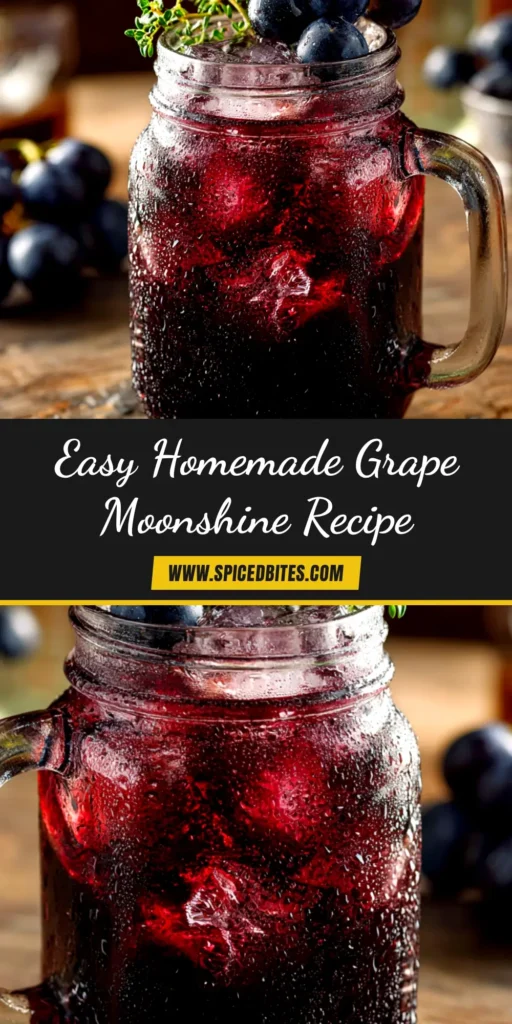
Grape Moonshine Recipe
Grape Moonshine Recipe: The Ultimate Beginner's Guide
Equipment
- 1 5-gallon fermenter with airlock
- 1 Pot Still
- 1 Hydrometer
- 1 Cheesecloth or fine-mesh strainer
Ingredients
- 25 lbs fresh grapes (like Concord or Muscadine), or 4 gallons of 100% pure grape juice Ensure juice has no preservatives.
- 8 lbs granulated sugar
- 4 gallons filtered, chlorine-free water
- 1 packet wine or distiller's yeast
Instructions
Mash Preparation and Fermentation
- If using fresh grapes, wash and de-stem them. Crush the grapes to release their juice and transfer the pulp, skins, and juice to a sanitized fermenter. If using juice, pour it directly into the fermenter.
- Add the sugar and stir until completely dissolved. Add the chlorine-free water, ensuring you leave several inches of headspace at the top of the fermenter.
- Check that the mash temperature is between 70-80°F (21-27°C). Sprinkle the yeast over the surface of the mash.
- Seal the fermenter with its lid and an airlock. Store in a dark, temperature-stable location for 7-14 days. Fermentation is complete when the airlock stops bubbling and hydrometer readings are stable for 3 consecutive days.
Distillation
- Carefully strain the fermented liquid (wash) through cheesecloth to remove all solid grape particles.
- Transfer the wash to your still. Heat it slowly and steadily. Prepare to collect the distillate in small glass jars.
- Discard the first few ounces (foreshots). Collect the middle portion (hearts), which is your moonshine. Stop collecting when the distillate becomes watery and smells off (tails).
- Proof down the collected hearts to your desired strength with filtered water. Age with toasted oak chips or in a small barrel if desired.
Notes
Legality: Home distillation for consumption is illegal in many places. This recipe is for educational purposes. Always comply with your local laws.


