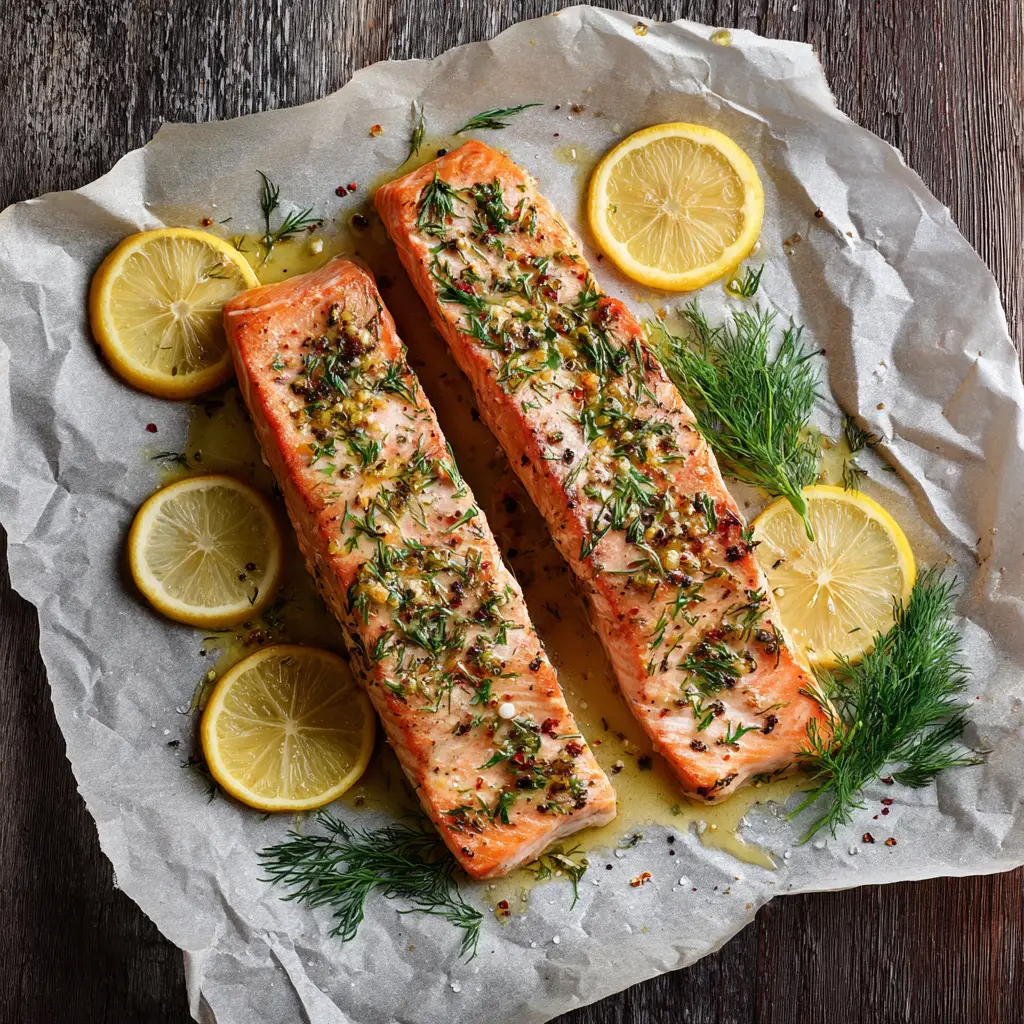
There is a specific kind of culinary magic that happens when high-quality protein meets the bright, herbaceous punch of fresh aromatics. This Lemon Dill Baked Salmon is the embodiment of that synergy, offering a visual and sensory experience that rivals the finest seafood bistros. Imagine two perfectly rectangular salmon fillets, baked to a delicate light pink and orange hue, resting on a rustic sheet of crumpled parchment paper.
The surface of the fish is glistening and moist, adorned with a generous scatter of finely chopped bright green dill and coarse specks of cracked black pepper. As you pull the tray from the oven, the edges of the salmon show a hint of crisp, slightly browned caramelization, promising a variety of textures in every bite. It is a dish that looks as vibrant as it tastes, framed by sun-yellow lemon slices and feathery dill sprigs.
Whether you are looking for a quick weeknight meal or a sophisticated centerpiece for a weekend dinner, this Lemon Dill Baked Salmon delivers. It is structurally sound, scientifically seasoned, and designed to provide maximum nutritional impact with minimal cleanup. Let’s dive into the forensic details of making this masterpiece in your own kitchen.
Why This Herb-Crusted Salmon Recipe Works
- Perfect Textural Contrast: By utilizing high-heat roasting, we achieve those coveted crisp, slightly browned edges while maintaining a glistening, moist interior that flakes at the touch of a fork.
- Forensic Visual Appeal: The contrast between the vibrant yellow lemon slices, the deep green of the fresh dill, and the soft orange hue of the salmon creates a professional-grade presentation.
- Scientifically Balanced Flavors: The acidity of the lemon cuts through the rich fats of the salmon, while the dill provides a refreshing, earthy finish that lingers on the palate.
- High-Protein Efficiency: Much like our high-protein cheeseburger bowls, this recipe focuses on nutrient density, making it an ideal choice for health-conscious cooks.
The Pantry Essentials for Glistening Salmon Fillets
To achieve the exact visual result of a moist, glistening fillet with browned edges, the choice of ingredients is paramount. We aren’t just looking for flavor; we are looking for the chemical reactions that occur during the baking process.
Fresh Salmon Fillets: You will need two rectangular fillets, approximately 6 oz (170g) each. Rectangular cuts ensure even cooking across the entire piece of fish, preventing the thin tail ends from drying out before the center is done.
Extra Virgin Olive Oil: Use 2 tbsp (30ml) of high-quality oil. This is your “invisible” foundation that creates the glistening surface and facilitates the heat transfer necessary for those slightly browned edges.
Fresh Chopped Dill: You will need 1/4 cup (10g) of finely chopped dill for the crust and additional feathery sprigs for the garnish. Dried dill cannot replicate the “bright green” scatter described in our visual blueprint.
Fresh Lemons: One large lemon, half sliced into vibrant rounds and the other half reserved for fresh juice. The slices not only add flavor but also protect the fish from direct heat, keeping it moist.
Coarse Cracked Black Pepper: Use 1 tsp (2g) of freshly cracked pepper. The “coarse specks” mentioned in the visual prompt provide a pungent heat and a beautiful visual texture against the pink fish.
Kosher Salt: 1/2 tsp (3g) of salt is essential for drawing out the natural sweetness of the salmon and ensuring the proteins retain moisture during the bake.
Essential Kitchen Tools for a Professional Finish
Achieving a restaurant-quality Lemon Dill Baked Salmon requires a few specific tools to manage moisture and heat. First, a heavy-duty rimmed baking sheet is necessary to provide a stable heat surface. The dark, rustic wooden surface in our visual guide suggests a home-cooked feel, but the magic happens on the metal tray.
You must use parchment paper. Crumpling the parchment paper slightly before laying it on the tray (as seen in the Midjourney prompt) helps it lay flat and creates small pockets where the lemon juices and olive oil can pool, basting the bottom of the fish. If you enjoy this method of baking fish, you might also find our Ginger Soy Fish recipe a perfect addition to your rotation.
A sharp chef’s knife is non-negotiable for achieving the “finely chopped” dill and the clean edges on the lemon slices. Finally, an instant-read meat thermometer is the secret weapon of every elite home cook to ensure the salmon never exceeds an internal temperature of 145°F (63°C).
Mastering the Bake: Step-by-Step Instructions
Phase 1: Preparing the Parchment Foundation
Preheat your oven to 400°F (200°C). This higher temperature is critical for achieving the “slightly browned edges” while keeping the center of the salmon a light pink and orange hue.
Take a sheet of off-white parchment paper and crumple it into a ball, then flatten it back out onto your baking sheet. This creates the rustic, textured look from our visual blueprint. Lightly brush the center of the parchment with 1/2 tbsp (7ml) of olive oil to prevent sticking.
Phase 2: Seasoning for Visual Impact
Pat your two rectangular salmon fillets bone-dry with a paper towel. Moisture on the surface is the enemy of browning. Once dry, rub the remaining olive oil over the top and sides of the fillets until they are glistening.
Season generously with kosher salt and the coarse cracked black pepper. Ensure the pepper is visible as distinct specks. Press the finely chopped fresh dill onto the surface of the fish so it adheres to the oil, creating a vibrant green coating.
Phase 3: The Citrus Arrangement
Place the salmon fillets side-by-side on the parchment paper. Surround the fish with the vibrant yellow lemon slices. Placing a few slices partially tucked under the edges of the salmon can help infuse the fats with citrus aroma from the bottom up.
Add a few feathery sprigs of fresh dill around the salmon on the parchment. These will wilt slightly in the oven, releasing their essential oils and contributing to the “soft natural daylight” aesthetic of the final dish.
Phase 4: The Precision Bake
Slide the tray into the center rack of the oven. Bake for 12-15 minutes. At the 12-minute mark, check for sensory cues: the salmon should be transitioning to a light pink hue, and the fat (albumin) should just be starting to appear as tiny white beads.
For the “crisp, slightly browned edges,” you may want to move the tray to the top rack for the final 2 minutes. Look for the edges to turn a darker orange-gold while the surface remains moist and glistening. Remove from the oven immediately once the internal temperature hits 135-140°F (57-60°C), as carry-over cooking will bring it to the perfect 145°F (63°C).

Expert Tips for Perfect Lemon Dill Baked Salmon
- Room Temperature Start: Take your salmon out of the fridge 15 minutes before cooking. This ensures the center warms up at the same rate as the edges, preventing a dry exterior.
- The “Flake” Test: If you don’t have a thermometer, gently press the top of the fillet with a fork. If the layers of the fish begin to separate (flake) easily, it is done.
- Quality of Dill: Only use the feathery leaves of the dill. The thick stems can be bitter and won’t provide the delicate visual scatter required for this recipe.
- Don’t Overcrowd: Ensure there is at least an inch of space between the two fillets. Airflow is essential for achieving those browned, crisp edges rather than steaming the fish.
Storing and Reheating Your Seafood
Lemon Dill Baked Salmon is best enjoyed immediately for the best texture, but it can be stored in an airtight container in the refrigerator for up to 2 days. The fresh dill will darken slightly over time, but the flavor will remain intact.
To reheat, avoid the microwave, which can make the salmon rubbery. Instead, place the fillets back on parchment paper in a 275°F (135°C) oven for 8-10 minutes until warmed through. This preserves the glistening surface and prevents the fish from drying out.
What to Serve With This Vibrant Salmon
This dish pairs beautifully with light, Mediterranean-inspired sides. A bed of fluffy quinoa or a crisp green salad works wonders. If you are looking for a more decadent pairing, try serving it alongside our creamy chicken broccoli penne for a surf-and-turf style buffet.
For dessert, stay with the citrus theme and try a slice of lemon custard cake or a piece of coconut ricotta cake to round out the meal. The acidity in the salmon preparation cleanses the palate, making it ready for a sweet, creamy finish.
Frequently Asked Questions
Yes, but you must thaw them completely in the refrigerator and pat them very dry. Frozen salmon often releases more moisture, so drying is crucial to avoid steaming the fish.
For the best flavor and the vibrant green visual scatter seen in the photos, fresh dill is highly recommended. Dried dill is much more potent and lacks the refreshing citrus-like notes of fresh sprigs.
Patting the salmon completely dry before adding oil and baking at a high temperature (400°F/200°C) is key. For extra browning, place the tray on the top oven rack for the last 2 minutes.
Baking with the skin on helps protect the delicate flesh from the heat of the pan and helps keep the salmon moist, even if you don’t plan on eating the skin.
Salmon is safely cooked at 145°F (63°C). To avoid overcooking, pull it from the oven at 135-140°F and let it rest for 5 minutes.
The Complete Lemon Dill Baked Salmon Recipe
Lemon Dill Baked Salmon: The Ultimate 20-Minute Healthy Dinner
Equipment
- 1 Baking Sheet Rimmed sheet pan
- 1 Parchment paper Off-white, crumpled
- 1 Instant-Read Thermometer To check internal temperature
Ingredients
Salmon Ingredients
- 2 fillets Salmon Rectangular, ~6oz (170g) each
- 2 tbsp Olive Oil 30ml, Extra Virgin
- 1/4 cup Fresh Dill 10g, finely chopped
- 1 tsp Cracked Black Pepper 2g, coarse
- 1/2 tsp Kosher Salt 3g
- 1 large Lemon Sliced into rounds
- 4 sprigs Fresh Dill Feathery sprigs for garnish
Instructions
Preparation
- Preheat oven to 400°F (200°C). Crumple a sheet of parchment paper and place it on a baking tray.
- Pat salmon dry. Rub with olive oil (30ml). Season with salt (3g), cracked pepper (2g), and chopped dill (10g) until glistening.
Cooking
- Place salmon on parchment. Surround with lemon slices and dill sprigs. Bake for 12-15 minutes.
- Bake until salmon is light pink and edges are crisp and browned. Internal temp should be 145°F (63°C).
Notes
Don't skip the parchment paper for that rustic look.
Join the Spiced Bites Community!
The Lemon Dill Baked Salmon is more than just a recipe; it’s a testament to how simple ingredients can create a stunning, restaurant-quality meal at home. We hope this becomes a staple in your kitchen. If you enjoyed the crisp edges and glistening finish of this dish, please leave a comment below and let us know how it turned out!
Don’t forget to follow us on Pinterest for more visual recipe inspiration. Share your creations by tagging us—we love seeing your culinary forensic successes! Sign up for our newsletter to receive the latest recipes, from our Baked Italian Angel Chicken to our most indulgent desserts, delivered straight to your inbox.


